Free download — no saddle required
Start the Conversation on the Ground.
Grab our recommended checklist of groundwork exercises that can build a common language between you and your horse.
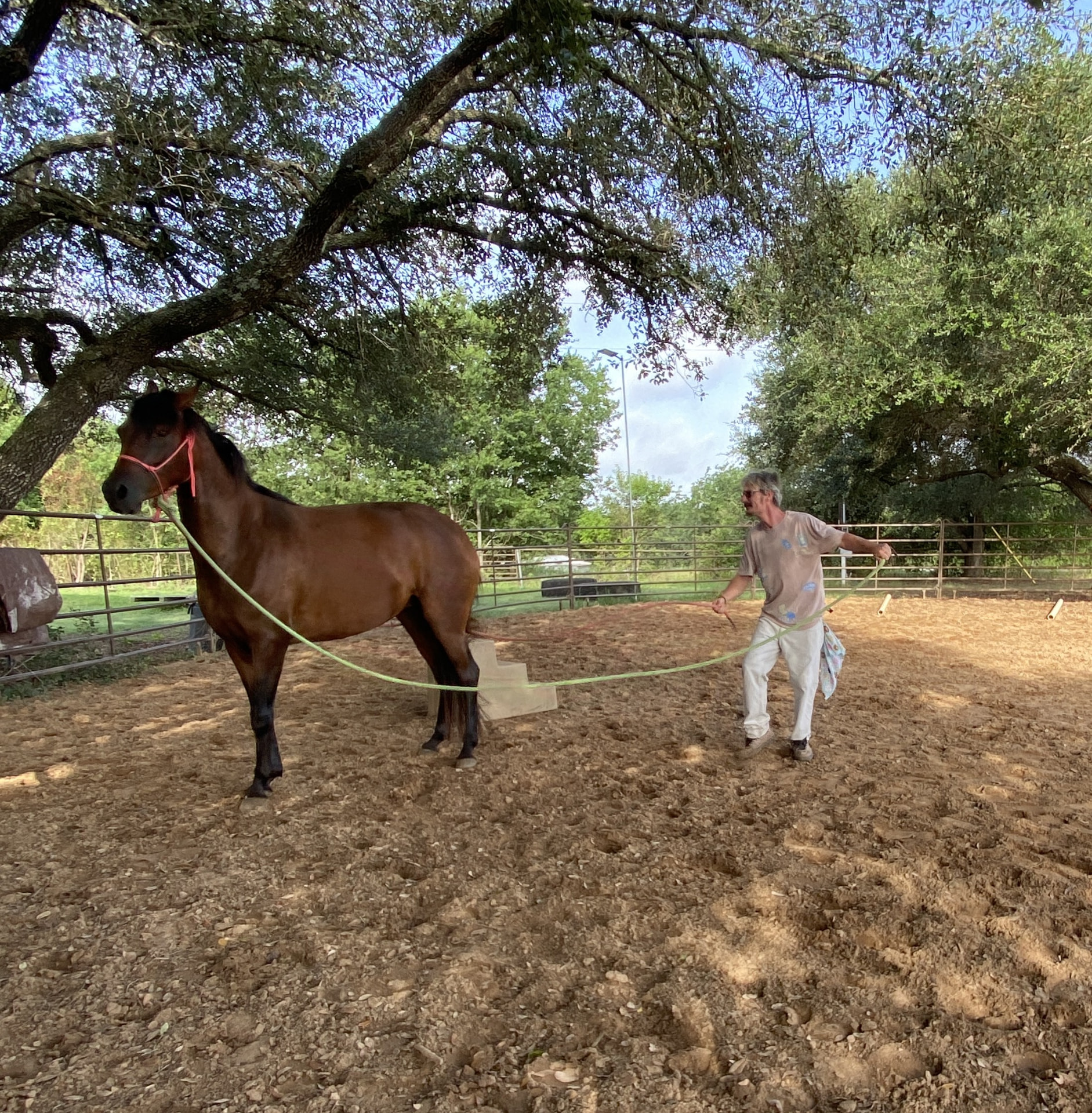
Relationship Magic is in the Groundwork
On its own or before a ride
Simple exercises that fit real life — before work, after chores.
Any breed, any discipline
These fundamentals carry over whether you ride barrels, trails, or the arena.
Ground-first method
The same foundation we apply with every horse that comes in for training.
What's inside
The Foundation Groundwork Checklist
Our list of fundamental groundwork exercises. Keep a calm demeanor with clear intention in your mind - your horse will know. Our basic equipment is a soft rope halter and a 14' lead rope, ideally tied together without a metal clasp.
- 1
Meet your horse calmly
Walk up at a slight angle with soft eyes and relaxed shoulders. Let them sniff the halter — halter them when they stand with you, not before. This is so important it can be the only thing you work on in a session!
- 2
Walk together on a loose lead
Your horse's shoulders follow your feet. Start with just a few calm steps. When you stop, they stop — then breathe and let it be easy.
- 3
Ask for one step back
A light wiggle of the lead is all it takes. The moment your horse shifts a single foot back, release everything. One good step beats ten rushed ones.
- 4
Bend the head, both directions
Gently guide their nose toward your hand on each side. Soft and slow — no pulling. A horse that bends willingly is a horse that stays relaxed.
- 5
Yield the hindquarters
Ask their back end to move away from you. We look for the horse to reach under themself with the moving leg crossing over in front of the standing leg.
- 6
Yield the shoulders
Now the front end steps across, just a step or two. Go smaller than you think you need to — small wins build a willing horse.
- 7
Moving the feet
Think about what your body position would be if you were mounted and asking your horse to start walking. Turn your body so your hips are facing the walk direction, and move your hips as though you were driving with your seat from the saddle. Use as little pressure as possible but as much as needed — up to swinging the tail of your lead rope at your horse's hip. When your horse starts walking, remove the pressure. Do this in both directions.
- 8
Introduce one new thing
A rope, a tarp, a bag — whatever's handy. Let your horse look, sniff, and investigate. Curiosity is the goal, not perfection.
- 9
Stand quietly together
Ask your horse to just stand with you for a minute or two, then build up. Quiet standing is real training — it teaches patience on the ground and in the saddle.
- 10
End on a win
Stop while things are going well, not after a struggle. One last easy request, plenty of rubs — your horse remembers how the session felt.
Want the full printable version?
Drop your email above and we'll send the formatted checklist — built to hang on the tack room wall.
Get the checklistJW Horsemanship & Services
Building willing partners through patient, consistent groundwork — starting colts, tuning up seasoned horses, and coaching riders who want a better relationship with the horse in front of them.
"The groundwork is the training."